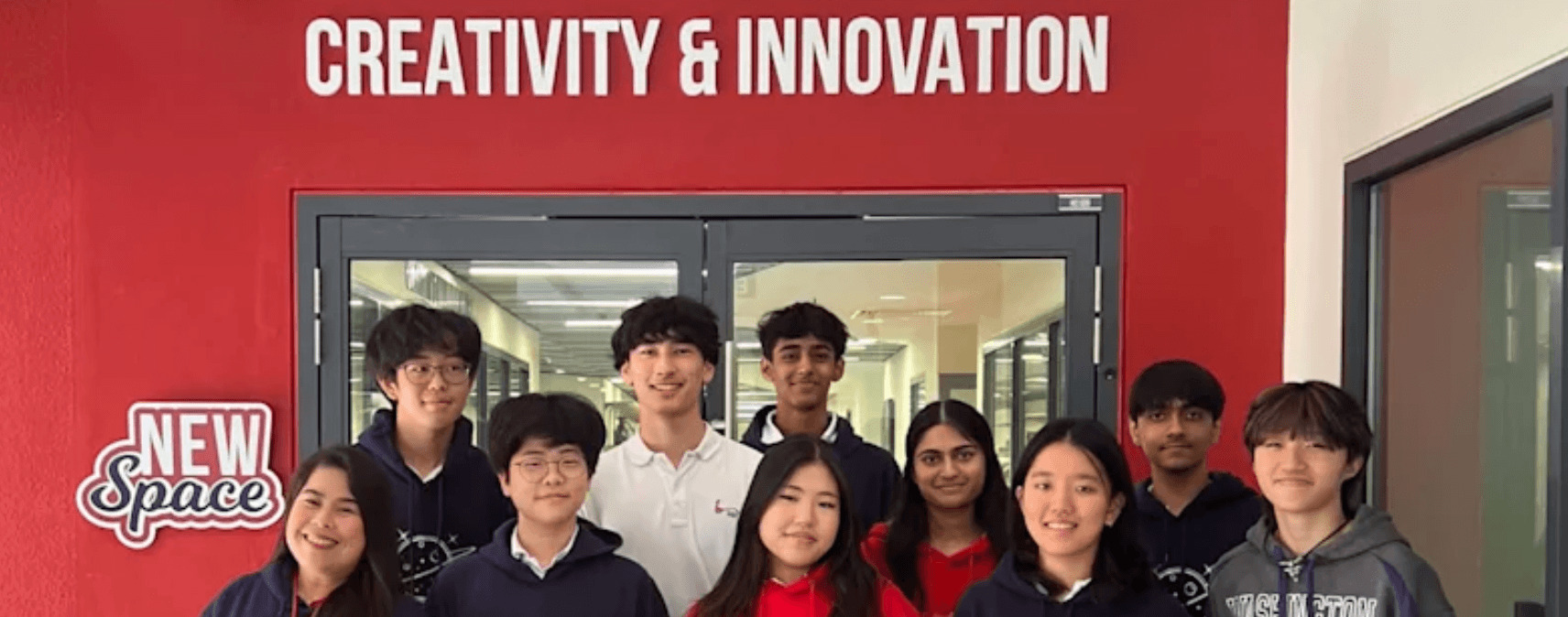
Eleven students at Singapore American School are taking STEM learning to new heights, developing a scientific experiment intended for the International Space Station through the school’s SpaceLab programme.
The student-led project explores how magnetorheological (MR) fluids behave in microgravity and their potential applications in shock absorption. The experiment is scheduled to be conducted aboard the International Space Station (ISS) during winter 2026, giving students the opportunity to apply classroom knowledge to a scientific investigation in space.
Exploring Science Beyond the Classroom
The SpaceLab programme at Singapore American School enables students to participate in the research, design and development of an experiment intended for the International Space Station.
For the 2025-2026 project, the team is investigating magnetorheological fluids, specialised materials that can change their flow properties in response to a magnetic field. Understanding how these fluids behave in microgravity could contribute to research into shock absorption and other engineering applications. The project involves developing a functional experimental capsule, with students working through different stages of scientific research, prototyping, mechanical construction, electrical systems and software development.
A Collaborative Approach to STEM Education
The 11-member SpaceLab team brings together students from Grades 10 to 12, each contributing different technical skills and interests.
Led by student co-captains Munira and Shreyas, the team is organised into specialised groups responsible for electrical engineering, software development, mechanical design, research and outreach. Students are involved in designing circuits, developing software, creating 3D models and testing physical prototypes. Their work requires continuous collaboration, technical problem-solving and adjustments as the experiment progresses towards completion.
The programme also draws on students’ wider experiences in robotics, engineering clubs and other STEM activities, allowing them to apply existing knowledge to a new scientific challenge.
Preparing an Experiment for Space
Developing an experiment for use in microgravity introduces technical considerations that extend beyond a conventional school laboratory.
The SpaceLab team must bring together mechanical components, electronics and software within a functioning capsule while investigating how materials respond under conditions different from those on Earth.
As the students refine their designs and test their systems, they gain practical experience in the processes involved in scientific experimentation, including research, prototyping, troubleshooting and collaborative engineering.
The project is intended to culminate in an experiment aboard the International Space Station, with the mission planned for winter 2026.
Developing Future Scientists and Engineers at SAS
SpaceLab offers an example of how Singapore American School (SAS) integrates experiential learning with opportunities for students to pursue interests in science, technology, engineering and mathematics.
Beyond the technical aspects of the project, students develop skills in teamwork, leadership, communication and independent research while working towards a shared scientific objective. For students considering future studies in engineering, computer science or scientific research, the programme provides exposure to the practical challenges involved in developing and testing an experiment.
As the SpaceLab team continues to refine its experiment ahead of the planned mission, the project represents an exciting opportunity for SAS students to contribute to scientific research beyond the classroom.
From Singapore to the International Space Station, the journey is still unfolding.